
WODARSKI’S DETROIT UNDERGROUND ROCK
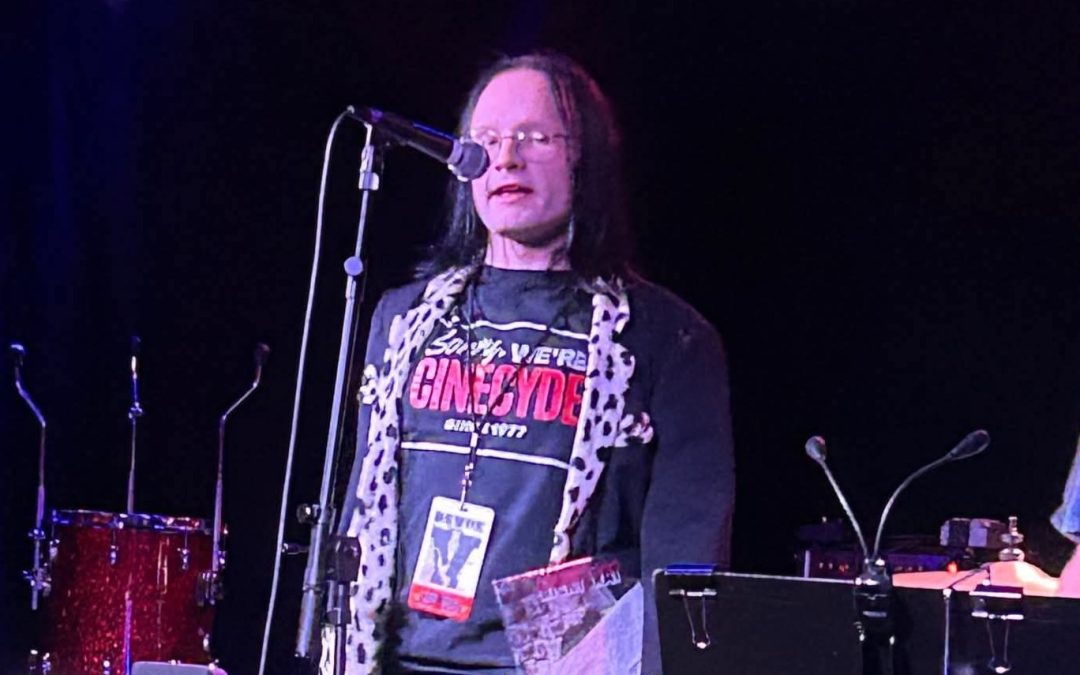
Michigan-based author and musician Creighton Wodarski is currently writing a book on Detroit’s underground Punk, Goth, and New Wave scene from roughly 1977 through the mid-1990s. Rock in Detroit recently spoke to Creighton about his inspirations, process, insights and ambitions.
ROCK IN DETROIT: Your project–writing about Detroit’s underground rock music scene mid-70s to mid-90s–seems fantastic. Detroit’s tradition of great music likely goes back to its founding and continues to this day. Why did you choose the period you did? What inspired the project?
CREIGHTON: Well, there are several answers to those questions. Growing up, I would hear stories from my mom about her time in the Punk rock and underground music (Goth, New Wave) scene in the 80s, so it was like my mythology growing up. Plus I love Punk rock, Goth and New Wave music from that period of time. I think what made me choose to cover this period of time and this scene is the fact that it is so unknown to the wider public, and not really talked about like other eras in Detroit’s music history. What occurred in Detroit’s underground music scene in the 70s, 80s and 90s was one of a kind, and I feel like the public needs to know this story.
ROCK IN DETROIT: I’ve heard your book is tentatively entitled Glam, Gloom and Grit. That’s alphabetical. Would you say that’s also the order of how you would describe things back then?
CREIGHTON: I’d definitely say it was a mix of those three things. The term Glam to me, in the book, represents the fact that the underground music scene essentially was influenced by Glam Rock. The term Glam in my book also symbolizes Detroit’s faded glamour in that era. The term Gloom in my book symbolizes the urban decay that gloomily engulfed the city at that time, and also had an impact on the way Detroit’s underground music scene developed. The term Grit in relation to my book is about the Do-It-Yourself attitude, alongside the dedication and fortitude you had to have to be involved in this scene. It sure wasn’t for polite society.
ROCK IN DETROIT: What would you say is the thing you’ve found out about the Detroit music scene then that has been the biggest surprise to you?
CREIGHTON: I think the biggest surprise is that Detroit’s whole scene isn’t even really talked about. When you read about Punk rock or Goth, they typically talk about L.A., London or New York as if they were the only places at the time with those kinds of scenes. Detroit had a scene that I think matched those cities. Another surprise to me that I think needs to be highlighted is how much influence the gay community had on the underground scene in Detroit. Bookie’s and Todd’s were two very pivotal and vital venues for this whole period of time I’m covering, and they were once gay clubs that were tolerant of the underground music scene compared to most places.
ROCK IN DETROIT: Pansy Division, Tribe 8, and God Is My Co-Pilot were some openly gay bands in the early 90s. Were there any openly gay bands in Detroit in the period you’re focusing on?
CREIGHTON: Not that I know of, or can recall. Being gay in the 70s and 80s in Detroit was not easy at all, and so an openly gay band in that era would’ve faced violence from some people, like the Nazi skinheads, who terrorized so many people in the scene.
ROCK IN DETROIT: When it comes to Detroit music and the music scene, how would you say things have changed between then and now?
CREIGHTON: When you look at the scene that was going on back in those days, it was like a big community of sorts. Bookie’s, the Freezer, Todd’s, and the Graystone, etc., were not just places to see bands or dance, they were places where people who were the misfits of society were able to enjoy themselves and express themselves, and mingle with people who were just like them. It was DIY, and it was like a lifestyle above all else. I feel like a lot of this is lacking in underground scenes anywhere you look, but I think we still have great punk bands that keep the flame burning.
ROCK IN DETROIT: Back in the early 80s, there was a Boston band, The Atlantics. They were one of the best I’ve ever seen. They were signed and toured with Cheap Trick. But their label went under right after their first album and their moment was lost. Any Detroit bands you’d particularly place in that category of “Should have made it, but didn’t”?
CREIGHTON: Lots of bands that I would place in that category, but to name a few: the early punk bands like The Ramrods, Cinecyde and Coldcock; Hardcore Punk bands like Bored Youth, Forced Anger, and Heresy; unique bands like L-Seven, Country Bob and the Blood Farmers, Majesty Crush, Danse Macabre and the Gargoyle Sox. So many Detroit bands were overlooked that were talented and had potential but for some reason never made it.
ROCK IN DETROIT: Could you suggest some tracks from some of those bands that readers might want to check out to get an idea what was going on musically back in the day?
CREIGHTON: Well, here would be my list for people: for getting an understanding of what Detroit’s Punk and early New Wave scene sounded like, I’d suggest Coldcock – I Wanna Be Rich, Cinecyde – Gutless Radio, The Cult Heroes – Amerikan Story and the Algebra Mothers – Car Sick. For 80s Punk I’d recommend Heresy – Driven, which is their full album; Forced Anger – Human Experiment, Bored Youth – Are You Alive, and Ugly But Proud – Bein’ Ugly Is Alright. For more alternative stuff across the era I’m covering: L-Seven – Insanity, G.L.O.D. – G.L.O.D. (I can’t find a single track, but their full album is on YouTube), Danse Macabre – Todds 1984 (this is film footage of one of Detroit’s Goth bands from the 80s, so it’s not an album or track, but you can hear some of what our goth bands were like), and Gargoyle Sox – As The Master Sleeps.
ROCK IN DETROIT: Thirty, forty years have passed since those recordings. Do they sound dated to your ear?
CREIGHTON: Some do, but some are still relevant to this day. If you can overlook the dated sound on some of the recordings, you can hear lyrics that can resonate with people still. The lyricism of underground music like Punk and Post-Punk speaks to the soul and doesn’t beat around the bush.
ROCK IN DETROIT: Turning back to the book, approximately how many people have you spoken to so far? Have you had to do any sleuthing to find folks?
CREIGHTON: As of right now, definitely over 100 people, probably close to 110 people. I would say sleuthing I haven’t had to do much, more so, convincing people that my intentions are well placed, and that I am legitimate about writing this book.
ROCK IN DETROIT: The statute of limitations has run on most of the less-than-legal activities back then. Why do you think people were/are wary?
CREIGHTON: Well, I am 25 years old, and although my mom was in the scene in the 80s and 90s, I think some people who were wary wanted to test me to see if I was dedicated enough, and find out from others if I was legitimate in terms of writing this book and documenting this scene.
ROCK IN DETROIT: One thing I’m very curious about is the structure of the book. How much of it will tell the story through narrative prose by you and how much of it will be an edited or unedited transcript of the interviews you have been doing–or something in between? How did you decide on that structure?
CREIGHTON: I think, for this book, that the best way to structure the book is through a mix of some narrative prose by myself, and edited and transcribed quotes of the interviews I have done. I would like to put as much of the transcribed interviews into the book as I possibly can, so people can read the different stories and get a grasp for the differing perspectives and narratives that each person uniquely offers. However, I also realize that there needs to be some kind of narrative to drive the story along and direct the book, and that comes from me reading American Hardcore by Steven Blush, which was a big influence on me. I decided on this structure after reading through that book, and also reading Steve Miller’s Detroit Rock City and Legs McNeil’s book, Please Kill Me. I think oral history is a great way to write books, so I gravitated towards that process from day one.
ROCK IN DETROIT: Who would you say were the central figures of the underground rock scene during the period you’re focusing on?
CREIGHTON: To me, the central figures of the underground music scene in the period I am writing about were the scene goers and the people behind the scenes who made it all happen. While there were people who started venues and made things happen where bands could play, they had to rely on the success of getting people to show up to these events, so without the scene goers, there would’ve been no scene, thus making them all central figures to the story.
ROCK IN DETROIT: Fingers crossed that everything goes to plan—when might your book be hitting the shelves of a neighborhood bookstore?
CREIGHTON: I am aiming for 2028 at the earliest, to coincide with the 50th anniversary of when Bookie’s opened in 1978, but it may take a little bit longer, and so I’d say 2029/2030 at the latest.
ROCK IN DETROIT: Can’t wait. Will you be offering signed copies?
CREIGHTON: Absolutely!
ROCK IN DETROIT: Sign me up!
Recent Comments